Understanding MGO and UMF: Two Ways to Measure Manuka Honey Quality
Manuka honey has gained recognition worldwide for its unique properties, and if you've been shopping for it, you've likely noticed two rating systems appearing on labels: MGO and UMF. Both measure the strength and quality of Manuka honey, but they work in different ways. Understanding the difference can help you make informed choices about which product suits your needs.

What is UMF?
UMF stands for Unique Manuka Factor. This rating system was developed in New Zealand. UMF measures the honey's antibacterial potency by comparing it to a standard antiseptic solution called phenol.
The UMF scale typically ranges from 5+ to 20+, with higher numbers indicating stronger antibacterial activity. A UMF rating of 10+ is considered the minimum threshold for therapeutic-grade Manuka honey.
What is MGO?
MGO stands for Methylglyoxal, a naturally occurring compound found in Manuka honey. This rating system is more common in Australia and measures the concentration of methylglyoxal in milligrams per kilogram of honey. MGO levels in Manuka honey typically range from 30+ to 1000+ mg/kg.
Higher MGO numbers indicate a greater concentration of methylglyoxal, which is associated with the honey's bioactive properties. This measurement method is more straightforward in that it quantifies a specific chemical component rather than comparing to an external standard.
How Do They Compare?

Both certifications require testing by accredited laboratories, and both have their own regulatory frameworks. Interestingly, the two systems often correlate with geography: New Zealand producers typically display UMF ratings on their labels, while Australian Manuka honey producers more commonly use MGO ratings. This reflects the different regulatory traditions and testing standards in each country.
To help you compare products across both systems, here's a general conversion guide showing how UMF and MGO ratings typically align:
| UMF Rating | Approximate MGO Equivalent |
|---|---|
| UMF 5+ | MGO 80+ |
| UMF 10+ | MGO 250+ |
| UMF 15+ | MGO 500+ |
| UMF 20+ | MGO 800+ |
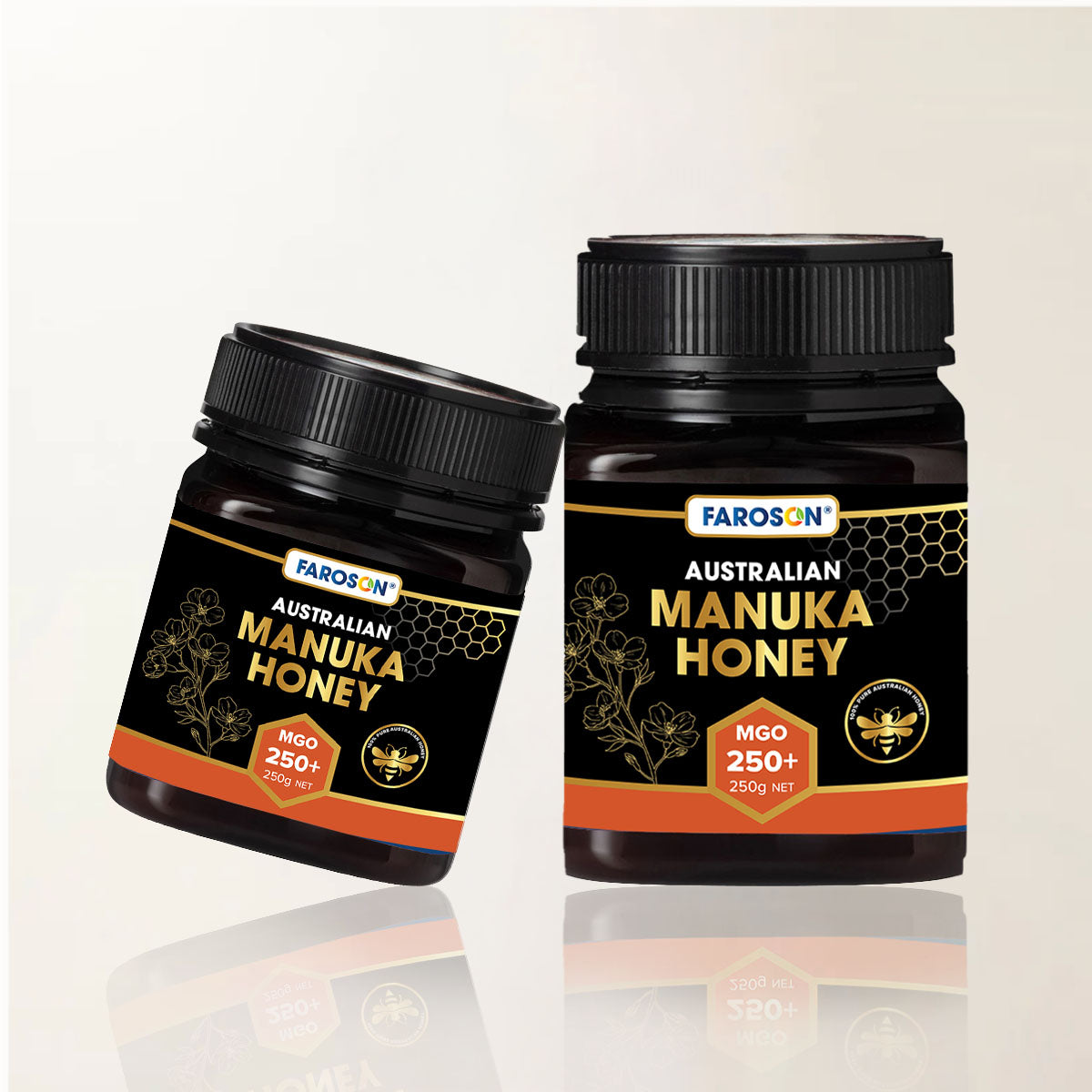
For example, if you're comparing an Australian honey with an MGO 250+ rating to a New Zealand honey with a UMF 10+ rating, they're roughly equivalent in strength. Similarly, a premium Australian MGO 500+ would be comparable to a UMF 15+ from New Zealand.
Which Should You Choose?
Both UMF and MGO ratings indicate quality Manuka honey. Therefore, you should choose based on factors like the level of the 2 ratings, availability, price, or brand preference. Some people prefer the established heritage of UMF, while others appreciate the direct chemical measurement that MGO provides. Either way, looking for a clearly labeled rating, whether UMF or MGO, is a good indicator that you're purchasing genuine, tested Manuka honey.
Final Thoughts
Whether rated by UMF or MGO, authentic Manuka honey is valued for its unique properties and quality. At Faroson, we proudly offer Australian Manuka honey with clearly tested MGO ratings, making it easy to choose the strength that best suits your needs and enjoy the benefits of genuine, premium Manuka honey.
Contact Details
Customer Support: 0416 716 401
Website: https://faroson.com.au/
Facebook: https://www.facebook.com/Faroson.au/
Instagram: https://www.instagram.com/faroson_au/